
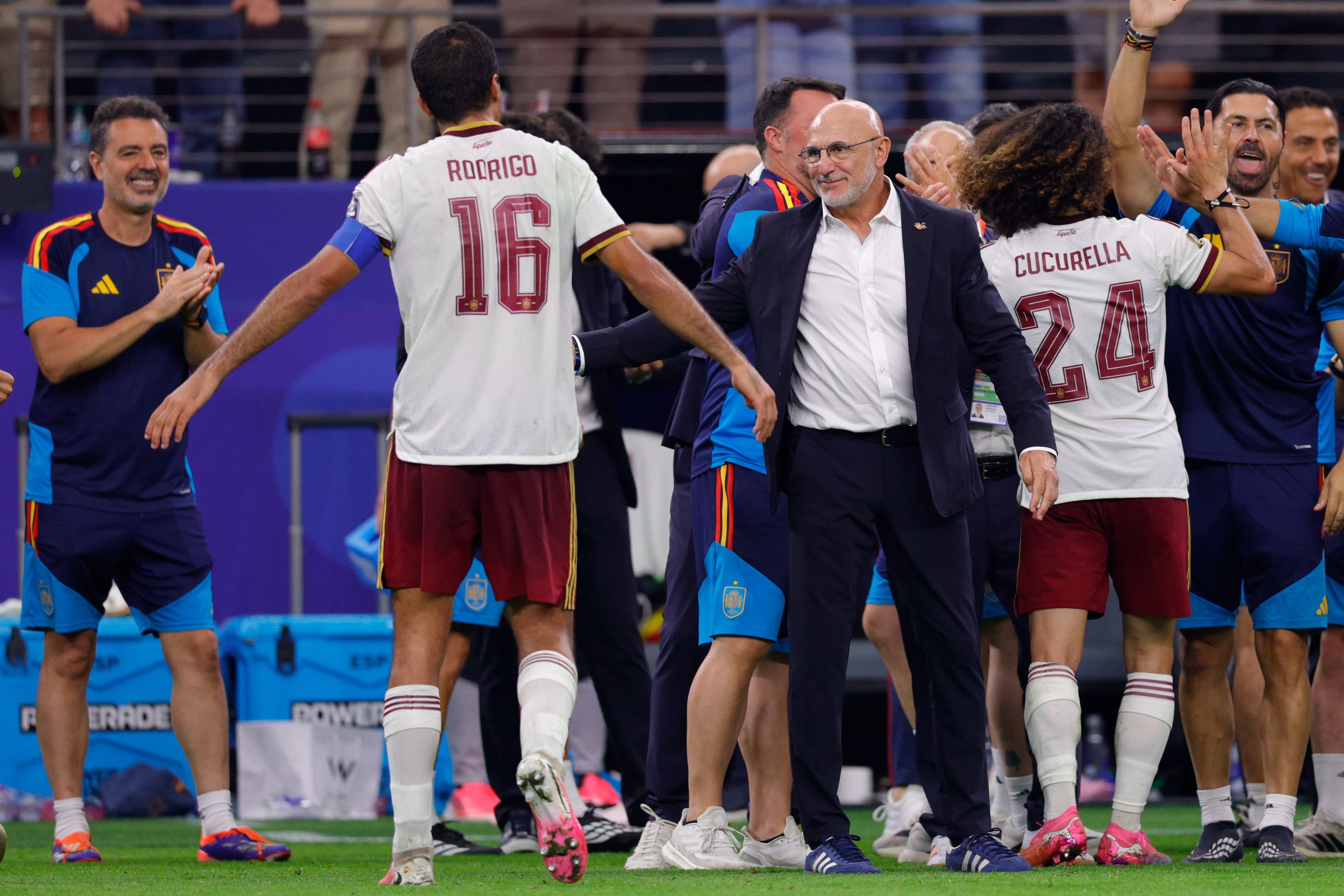
At the helm of La Roja since December 2022, following many years developing Spain's youth setups, Luis de la Fuente has established himself as a true product of the Spanish Football Federation. Having led Spain to glory at both the last European Championship and the recent World Cup, the coach has above all proven to be an outstanding man-manager capable of steering a squad to victory. In an interview with Spanish magazine Panenka, the head coach reflected on his methodology, highlighting the vital importance of "downplaying defeat" with his players: "Sometimes you lose even when you were the better team. Once players understand this, it lifts a weight of extra responsibility off their shoulders that isn't theirs to carry. They already have enough to deal with on the pitch."
It is a sharp psychological approach, which he complements by demanding a fine balance between tactical discipline and freedom of expression: "We simply ask them to be fully aware of the standards and responsibilities that come with being top athletes, while encouraging them to play with composure. Because when they play the way they know how to, they generally make the right decisions and rarely get it wrong."
"To be part of this group, this community, you have to be a good person"
Creating a safe, supportive environment allows players to fulfill their true potential. But for the Spanish strategist, this mutual trust starts from the moment the squad is selected: "We pick from the best players in the world, but also the best people in the world. To be part of our group, of this community, you first and foremost have to be a good person, naturally accept the role assigned to you, and make your contribution." To achieve his goals, Luis de la Fuente has benefited from rare continuity within the national federation, where he has been coaching since 2013: "The advantage we had as a coaching staff is that all these players grew up with us and won trophies across every age category we guided them through. It was simply about maintaining the continuity of a process started eleven or twelve years ago." As simple as that.