
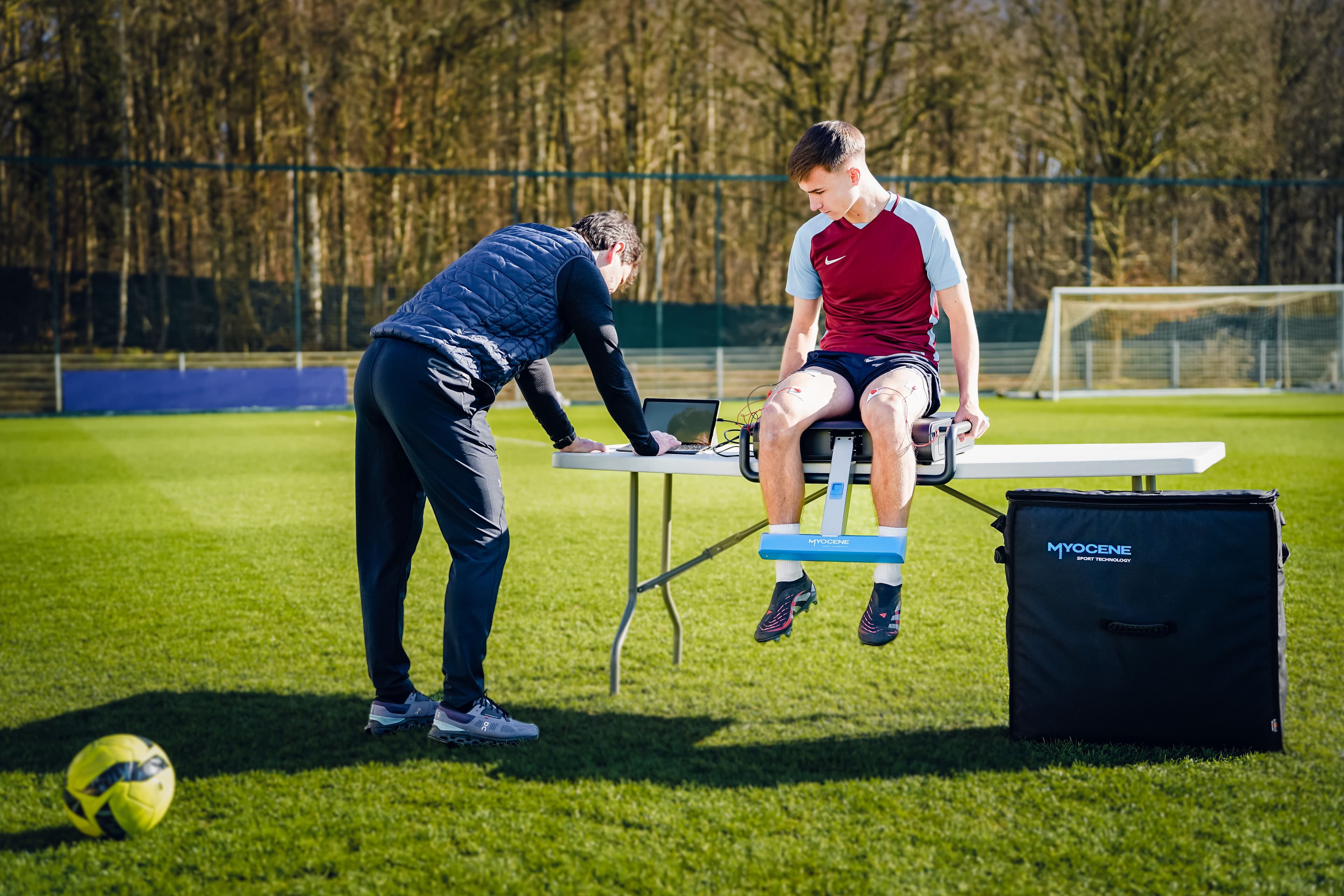

Sporting Braga, PSG, Crystal Palace… A growing number of elite clubs have integrated Myocene, a technology that is reshaping load management and injury prevention strategies.
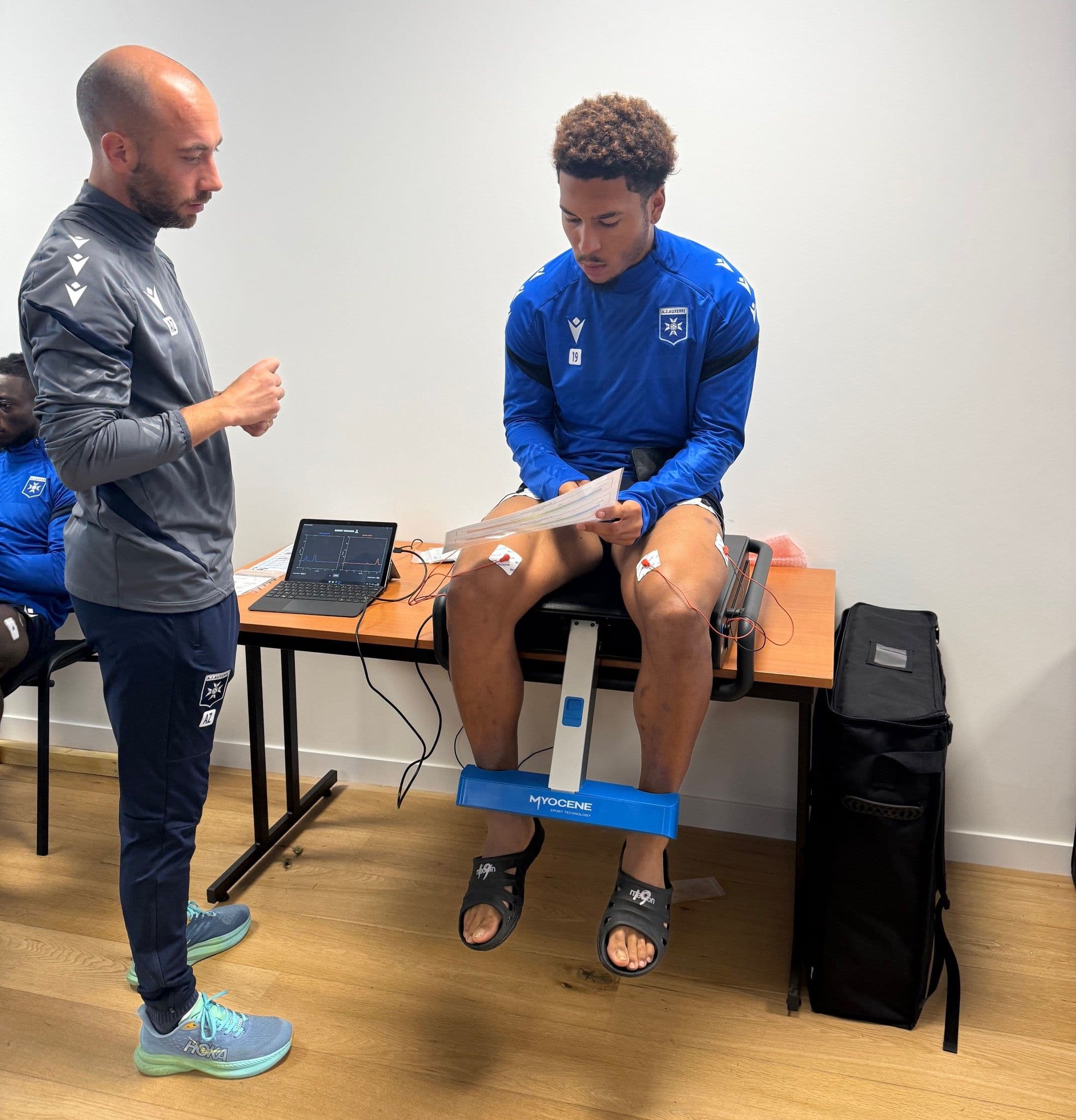
"The player sits down. Three electrodes are placed on each leg. The tool is connected to a portable computer and the measurement begins. Electrical impulses at low, medium, and high frequencies trigger muscle contractions. After 90 seconds, you obtain an index. It’s as simple as that.” Aurélien Denotti, Head of Performance at AJ Auxerre (Ligue 1), has been using Myocene twice per week since the start of the season. What is Myocene? A high-tech neuromuscular assessment device that is rapidly being adopted across elite sport. Its purpose: to objectively quantify muscle fatigue in order to preserve athlete availability and optimize injury prevention strategies.
Aurélien Denotti (AJ Auxerre): "A reliable tool to guide decisions relating to training participation"
“It was our head coach, Christophe Pélissier, who first mentioned it to me. When I looked into it, I saw that clubs like OGC Nice and Paris SG were already using it. We decided to trial it alongside our existing monitoring systems.” At Auxerre, the tool quickly became embedded in daily routines. For the performance and medical staff, it provides genuine decision-support in sensitive situations: return-to-play processes, medical alerts, or acute fatigue states. “It’s an extremely reliable tool that helps us determine whether a player should fully participate in a session or whether training load needs to be modified,” Denotti explains.
Objective Fatigue Assessment Beyond Subjective Perception
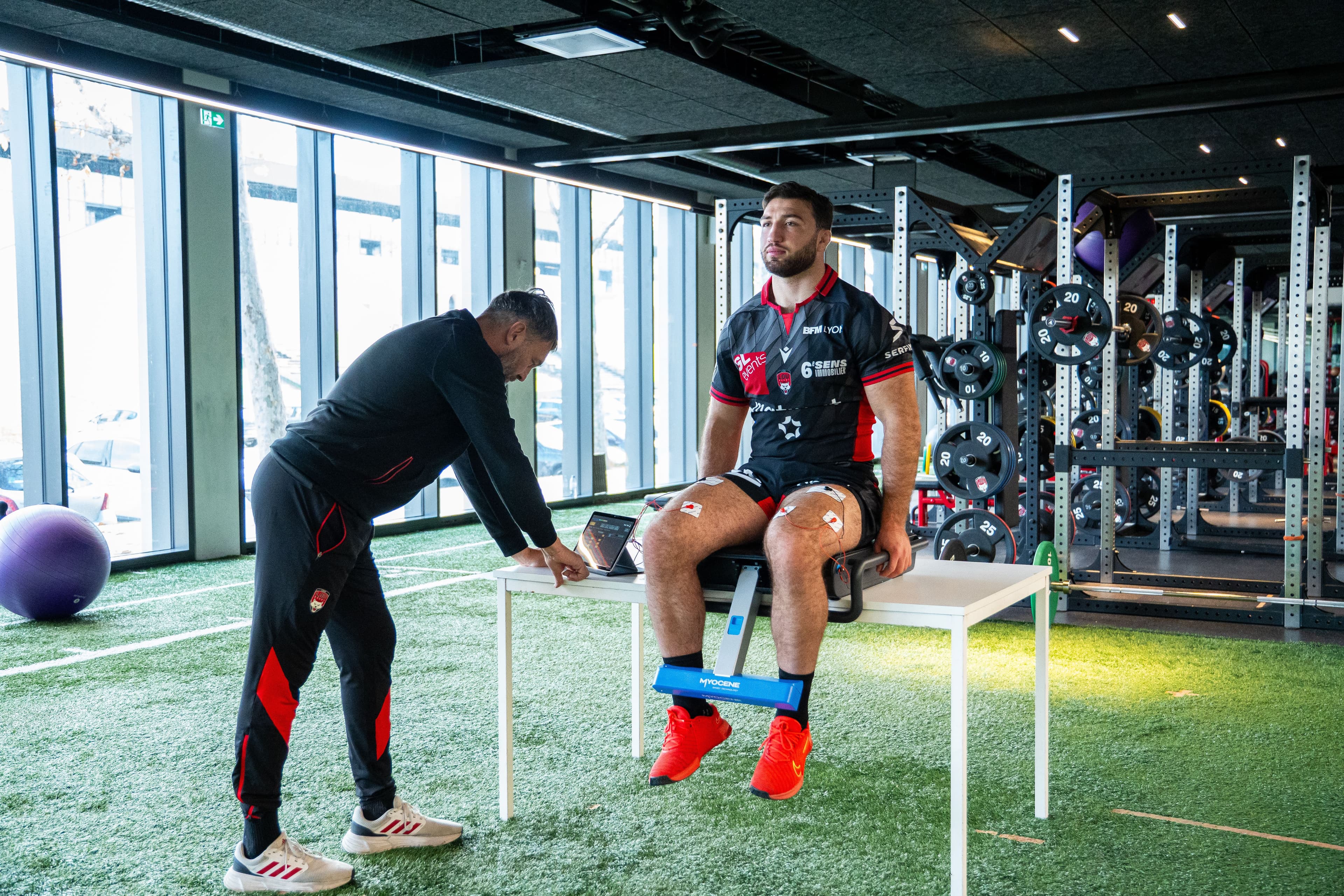
A similar rationale led the Lyon based, Top 14 LOU Rugby club to adopt the technology. "Mood can sometimes distort subjective data," says Pierre Sagot, the Head of Performance . "Beyond CPK blood tests (creatine phosphokinase levels), which are invasive and costly, we didn’t have many objective alternatives. Until we discovered Myocene". The club purchased three devices this season to support six strength & conditioning coaches working with approximately 40 professional players. “All players can be tested within 30 minutes. It’s minimally invasive and easy to implement.”
Martin Buchheit (Aspetar): "Unlike jump or maximal force tests, no voluntary effort is required"
Behind its apparent simplicity lies a robust physiological principle. Martin Buchheit, former Head of Performance at LOSC Lille and Paris Saint-Germain, now working at Aspetar Orthopaedic and Sports Medicine Hospital in Doha, explains: "We know that a fresh muscle responds similarly to low- and high-frequency electrical stimulation. A fatigued muscle, however, maintains its response at high frequency but shows a reduced response at low frequency."
This phenomenon — related to low-frequency fatigue and excitation–contraction coupling impairment — is precisely what Myocene quantifies. At Aspetar, where nearly 200 athletes are treated daily, the technology is primarily used in rehabilitation settings to monitor load tolerance and neuromuscular recovery throughout the return-to-play process. “Unlike jump tests or force-plate maximal strength tests, this method requires no voluntary effort from the athlete. It’s pure muscle physiology, without subjective interpretation. The measurement is robust, quick, and can be repeated several times per day if necessary. If a morning session has induced excessive fatigue and recovery is incomplete before an afternoon strength session, we adjust load accordingly.”
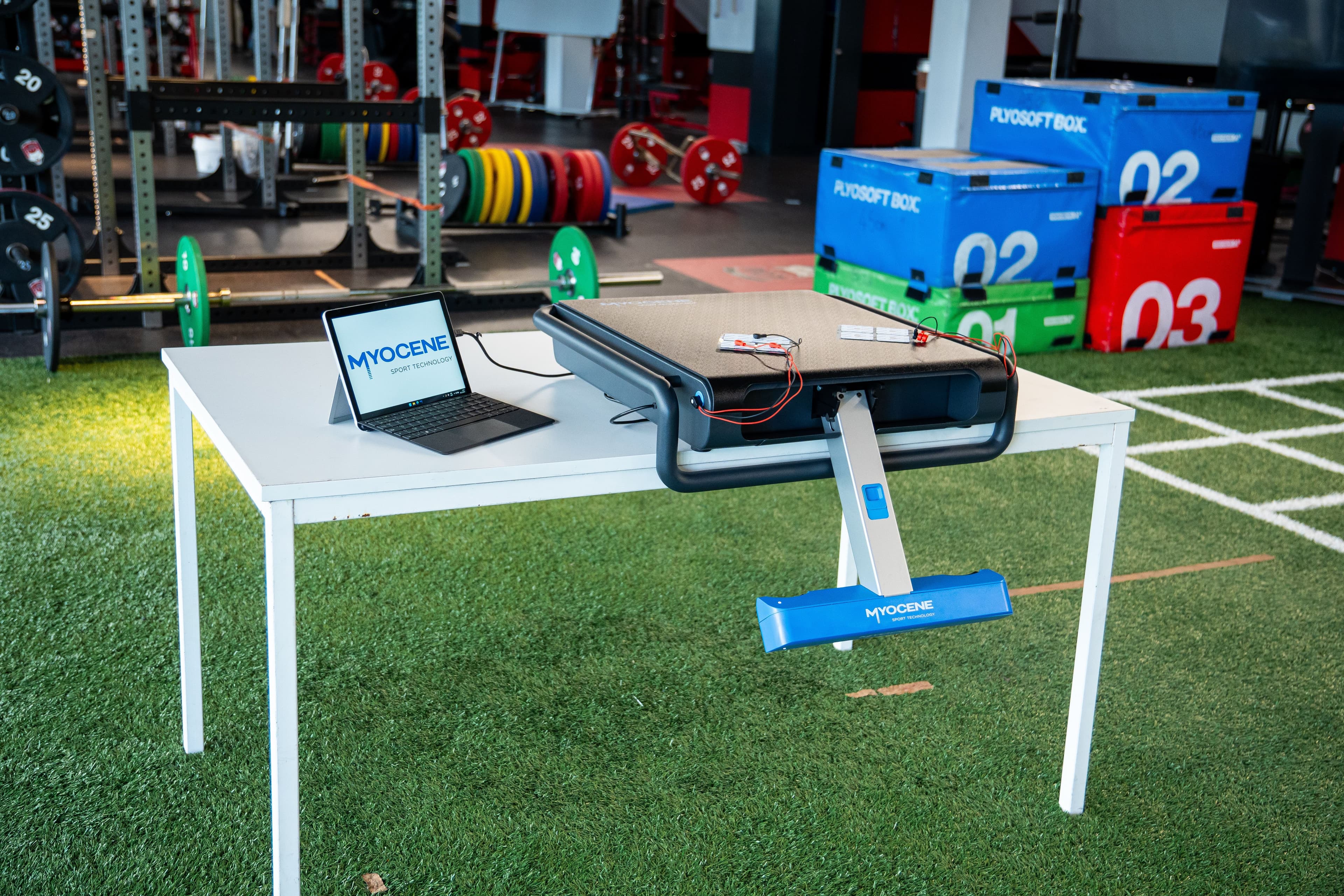
In Practice: Adjusting Training and Optimizing Readiness
At Auxerre, testing is conducted twice weekly. “On MD+2, after a rest day, we want to understand how the player returns at the start of the week,” Denotti explains. “If the value is below baseline, we modify the session, increase recovery time, or delay reintegration to preserve performance capacity.” A second assessment is performed on MD-2 to fine-tune end-of-week load and optimize squad readiness ahead of competition — while minimizing injury risk. For Sagot at LOU Rugby: “It’s another piece of the puzzle for individualizing strength, speed, and overall workload. For example, after heavy matches on soft ground, we observed that up to ten players were regularly entering a critical fatigue zone. We adjusted our early-week structure accordingly.”
Currently Without Equivalent on the Market
LOU’s performance staff also report strong player buy-in. “They’re genuinely interested. Some even self-manage and request testing. It integrates naturally at the start of the day.” Portability is another key advantage. Its size and weight make it easy to transport during training camps and away fixtures. “Today, there is no equivalent solution capable of delivering such an objective neuromuscular fatigue assessment without voluntary effort,” Buchheit notes. “We often observe significant quadriceps asymmetries, which serve as an excellent proxy for global lower-limb neuromuscular status.” Denotti concludes: “Given the correlations we observe between player perception, medical testing, and Myocene data, it is a reliable, practical, and highly valuable tool for any professional club.”
“We Are Only at the Beginning of What This Tool Can Deliver”
Three Questions to… Alexandre Dellal, Strength & Conditioning Coach, Haiti National Team
How long have you been using Myocene?
For over three years. I’ve seen all stages of product development. From Version 1 to the current model, the evolution has been remarkable. The device is now portable, robust, and extremely practical. The simultaneous bilateral measurement and simplified electrode placement significantly reduce testing time. Myocene has made neuromuscular electrostimulation assessment — traditionally complex — stable, reliable, and accessible to all performance staffs.
How do you integrate it into your workflow?
I use it strictly for neuromuscular analysis across three main areas:
- Reconditioning / return-to-play: to guide session content.
- Post-match monitoring: typically MD+2 and MD+3, alongside internal and external load metrics.
- Injury prevention & performance optimization: assessing fatigue status on MD-1 or MD-2 to inform staff decisions or validate freshness before competition.
It allows for more precise load management.
Would you recommend it?
Absolutely. Obtaining such a detailed neuromuscular status in seconds is a major advancement for both injury prevention and performance. It’s an essential decision-support tool in elite environments — and we are only at the beginning of its potential. That’s why we’ve implemented research protocols with postgraduate students to further explore its applications.
Growing International Adoption
In football, clubs such as Crystal Palace (Premier League) and Sporting Braga (Portugal) have integrated Myocene into their monitoring systems. It is also expanding into sports where precise load and recovery management are strategic: rugby (LOU), basketball (AS Monaco, NBA franchises), handball national teams, and cycling. In the United States, Ohio State Football — reigning national champions — also uses the technology. Beyond professional sport, Myocene is increasingly adopted by universities and research centres for applied studies and scientific investigations, reinforcing its dual operational and academic potential.
-> More informations on Myocene
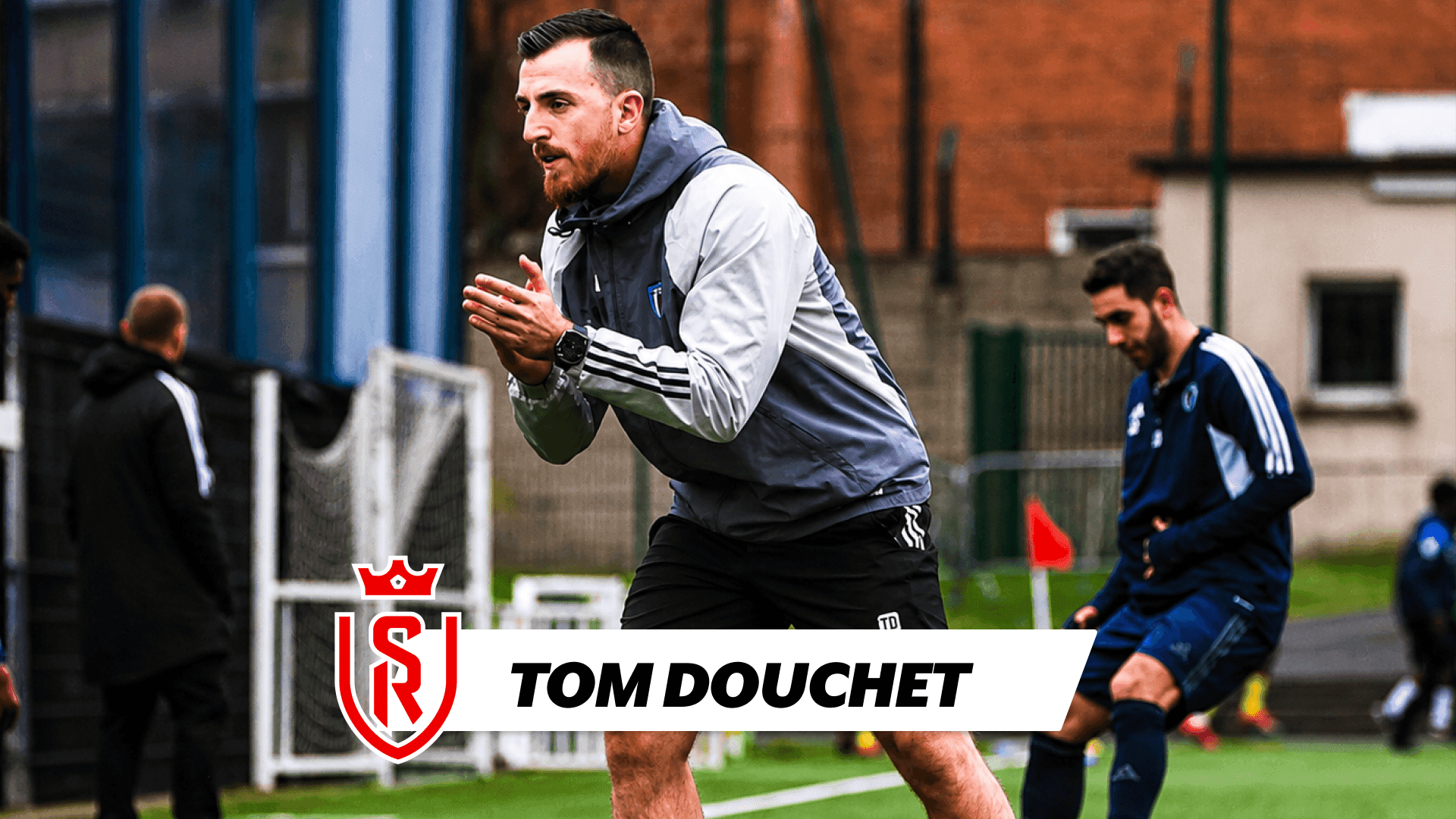
Load monitoring, physical disparities, absences, planning, or space management. Tom Douchet offers his solutions to address these recurring challenges during the pre-season.
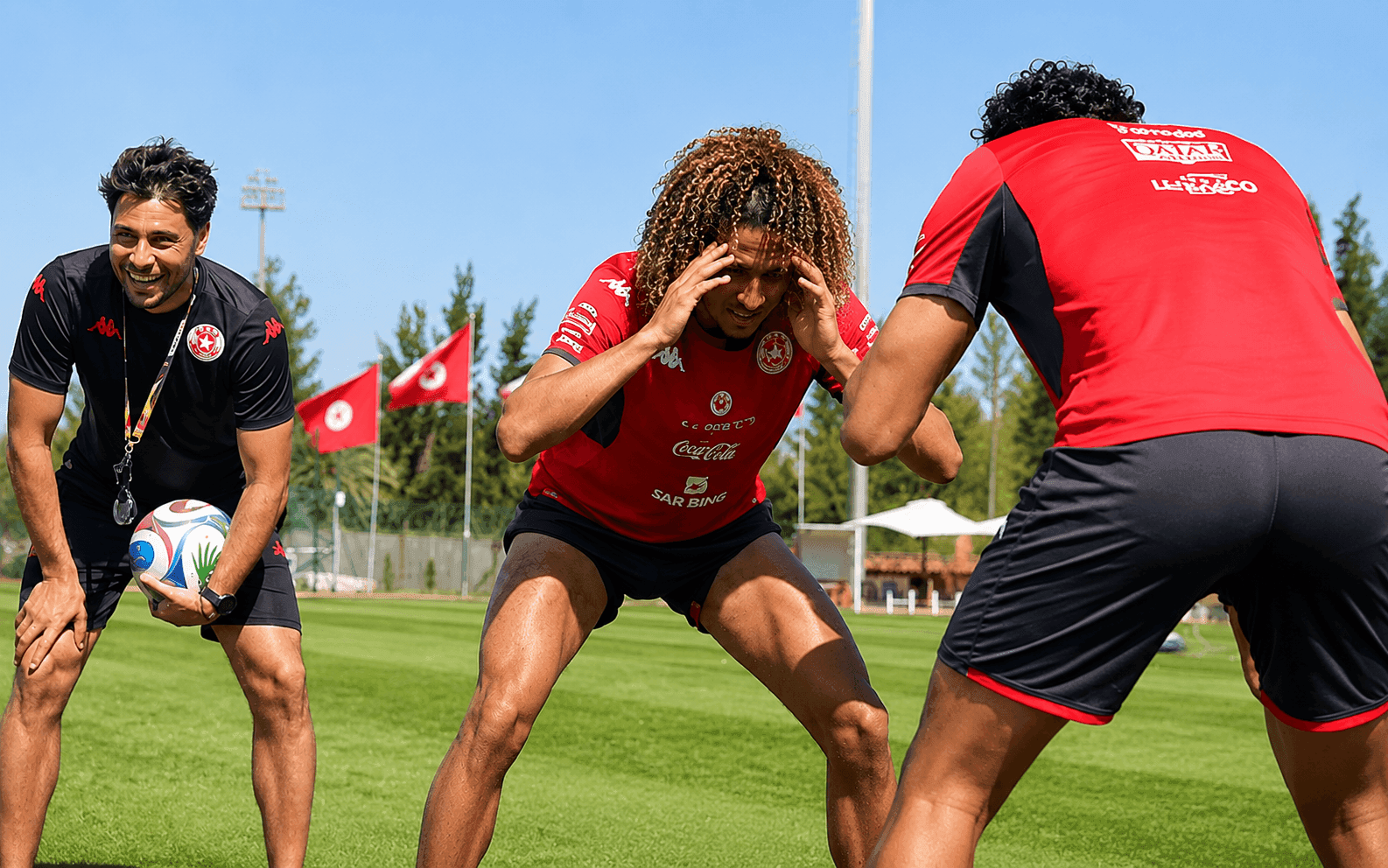
The former physical preparation coach of AS Monaco’s U17 and U19 highlights the key issues and priorities of athletic development for young players aged 13 to 18.
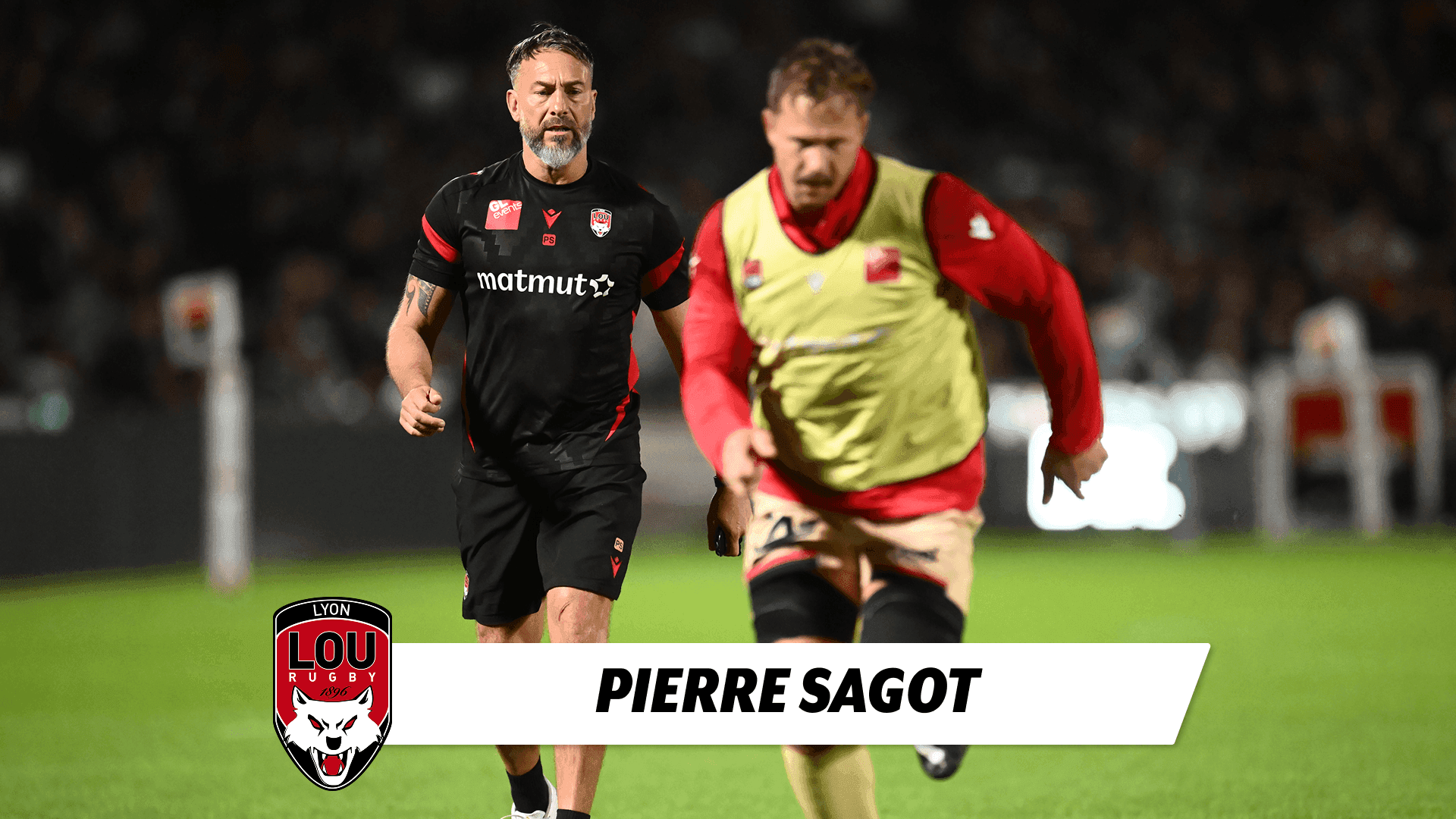
Is the relentless quest for hyper-optimization living its final hours? Yes, argues LOU Rugby’s Head of Performance, who introduces the concept of "robustness".