
The captaincy role is often assigned intuitively, without a structured process. Yet captains have a significant influence on group dynamics, performance, and coach–player communication. This premise is supported by a study by Newman et al. (2019), in which the authors propose a five-step development model to help coaches identify, develop and evaluate on-field leaders. 1. Build a leadership culture : define what effective leadership looks like within your squad and highlight the key behaviours expected, in order to align the team’s daily practices with this shared vision. 2. Clarify roles and responsibilities : a captain must act as a communication link between players and staff, safeguard social cohesion within the group, and provide guidance during moments of effort and pressure. 3. Identify and select the captain(s) : select one or several captains by aligning individual personality traits and leadership qualities with the responsibilities previously defined. 4. Develop leadership competencies : set clear behavioural expectations, create concrete leadership opportunities in training, and encourage structured post-session self-reflection. 5. Evaluate leadership effectiveness : assess the impact of the captaincy through regular one-to-one meetings, anonymous peer feedback, and guided self-assessment focused on areas for improvement. This five-step framework provides coaches with a structured tool to professionalise their approach to developing team captains.
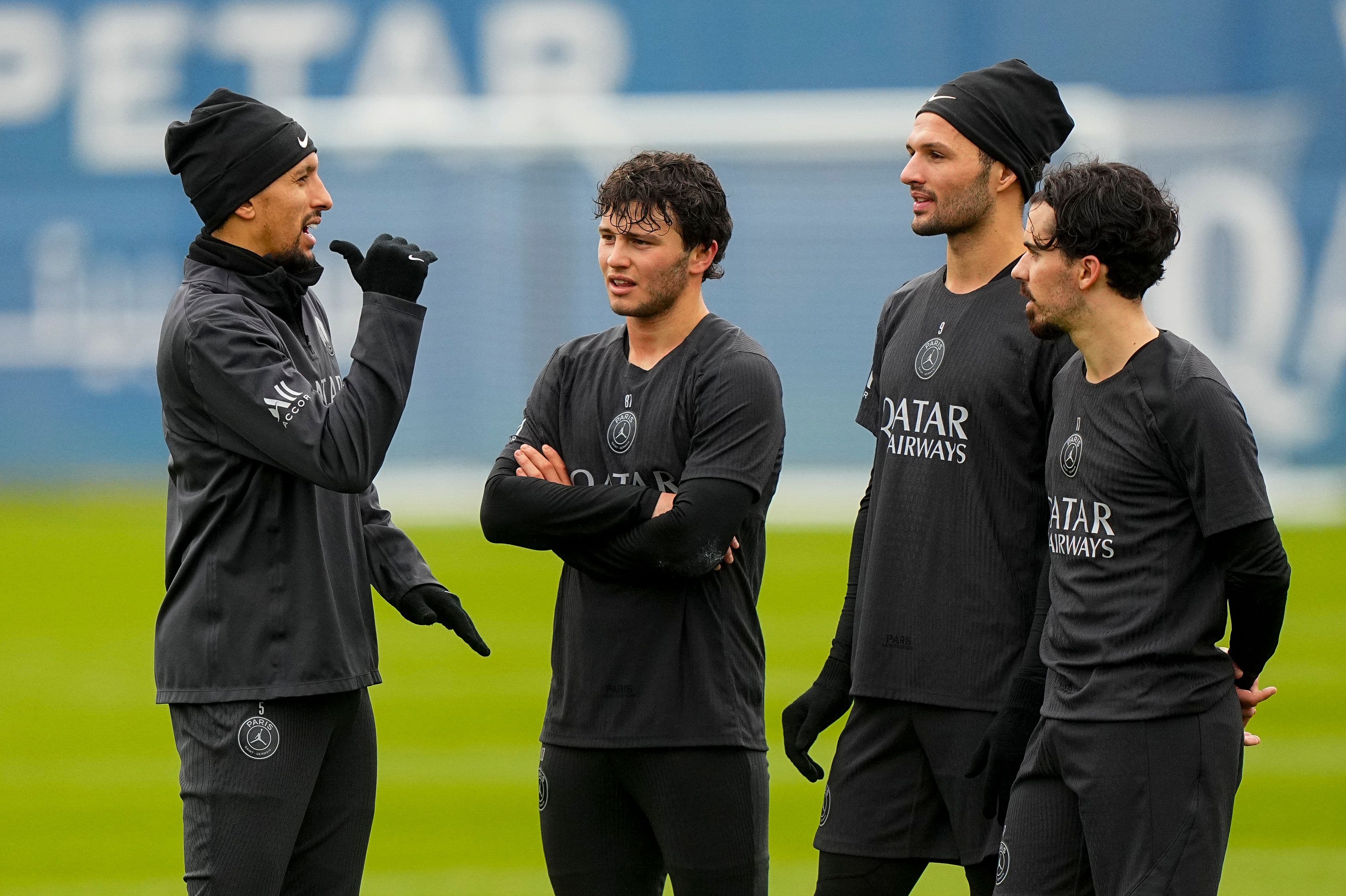
Paris Saint-Germain's iconic captain Marquinhos chats with teammates Joao Neves, Goncalo Ramos and Vitinha during training / ©Icon Sport