
The numbers speak for themselves. According to an investigation published by French media L'Équipe, the "stop-start" technique (widely known in Brazil as the paradinha) is suffering a severe drop in efficiency during this 2026 World Cup. Out of the first 60 penalties taken in the tournament (including penalty shootouts), 19 were struck following a stutter or a complete pause designed to freeze the goalkeeper. The result? A dismal 53% success rate, falling significantly short of the 70% conversion rate achieved through traditional, linear runs—and well below the historical 79% Expected Goals (xG) average for penalties. Speaking to the French daily, Christophe Lollichon (Dunkerque goalkeeper coach, formerly of Chelsea) attributes this failure to advanced preparation and tactical adaptations by keepers: "Generally, takers use this trick to force the keeper to commit to one side so they can slot it into the other. However, you can counter this by feeding them false information. It is all about flipping the script and deceiving the deceiver." As demonstrated by Paraguay's goalkeeper Orlando Gill against Kai Havertz, modern keepers now refuse to commit early. By staying firmly planted on their line, they force takers to choose their target at the absolute last second without any prior cues. Furthermore, breaking the momentum of the run-up mechanically kills the body's kinetic energy: the resulting strikes lack power, making them easier to handle. As Ben Lyttleton, author of the definitive book Twelve Yards, points out, this goalkeeper-dependent method demands "absolute technical and psychological mastery, embodied by exceptional players like Neymar or Bruno Fernandes." It serves as a stark reminder that a penalty remains a technical action in its own right, where simplicity often remains the ultimate guarantee of success.
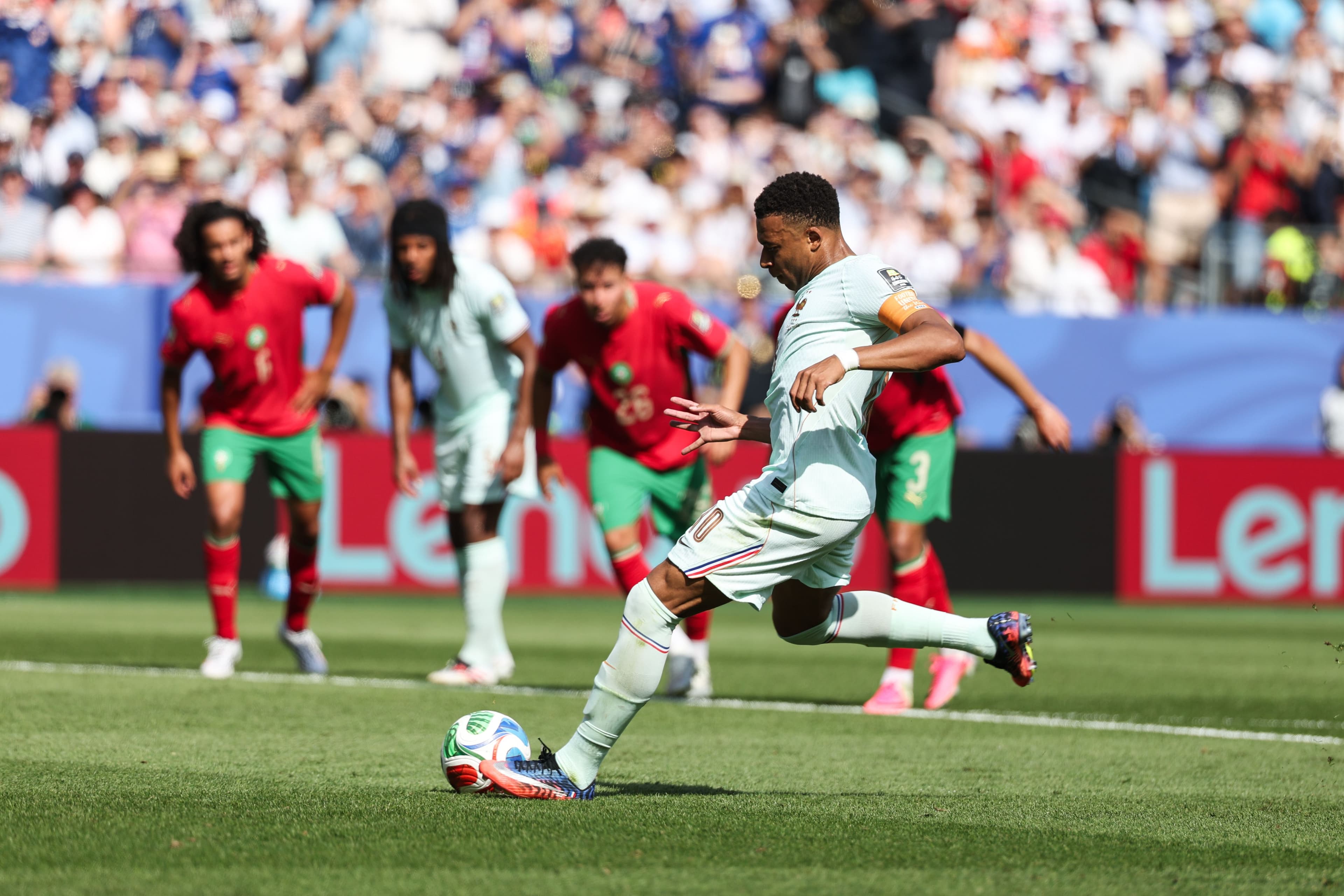
Against Morocco (2-0), Kylian Mbappé missed his penalty following a run-up disrupted by a sudden stop midway through, aiming to trick the keeper. / ©Icon Sport